The
Commonplace
Book
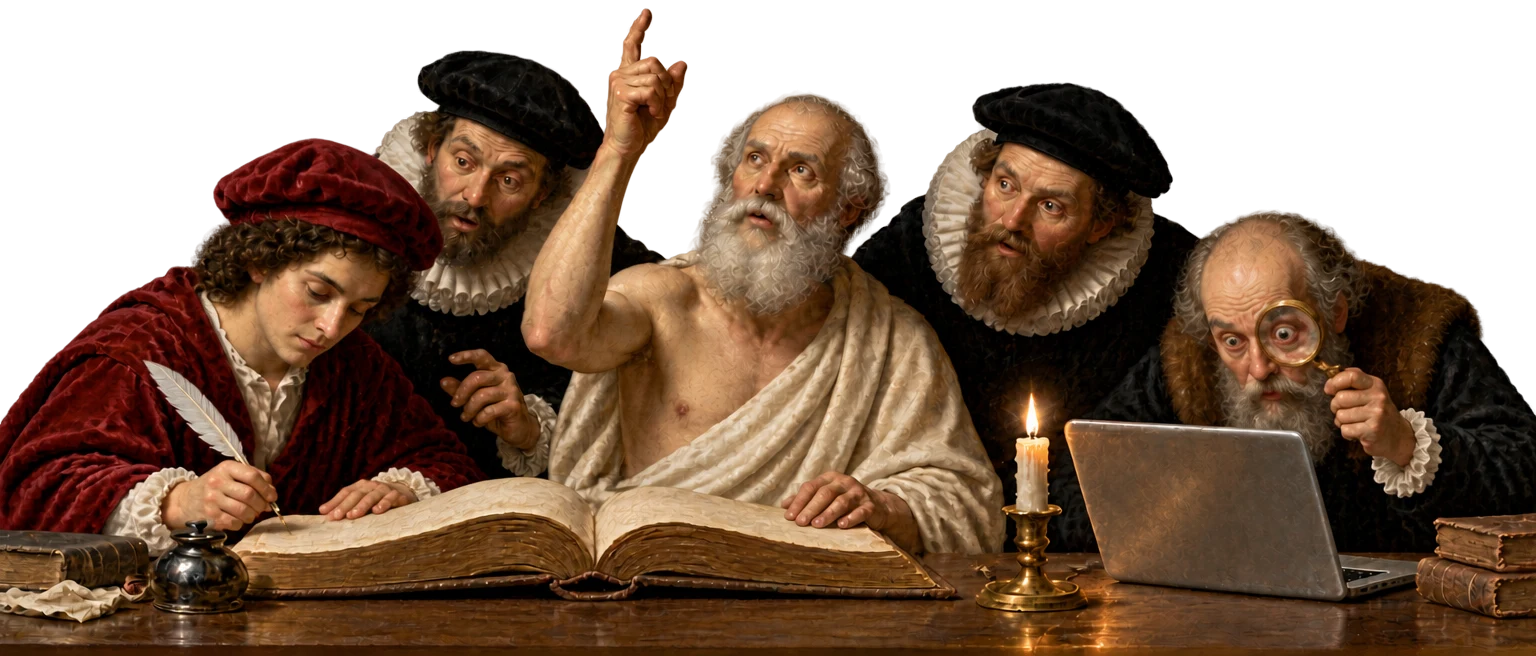
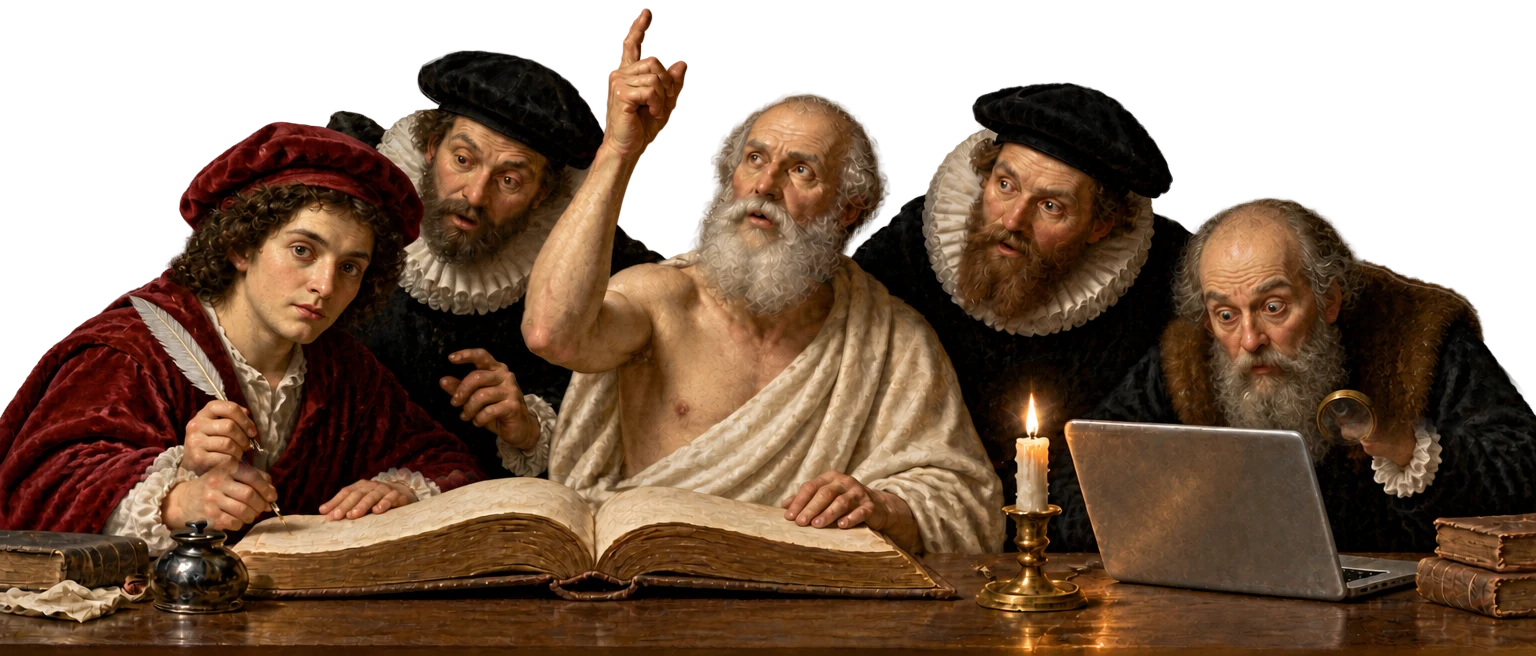
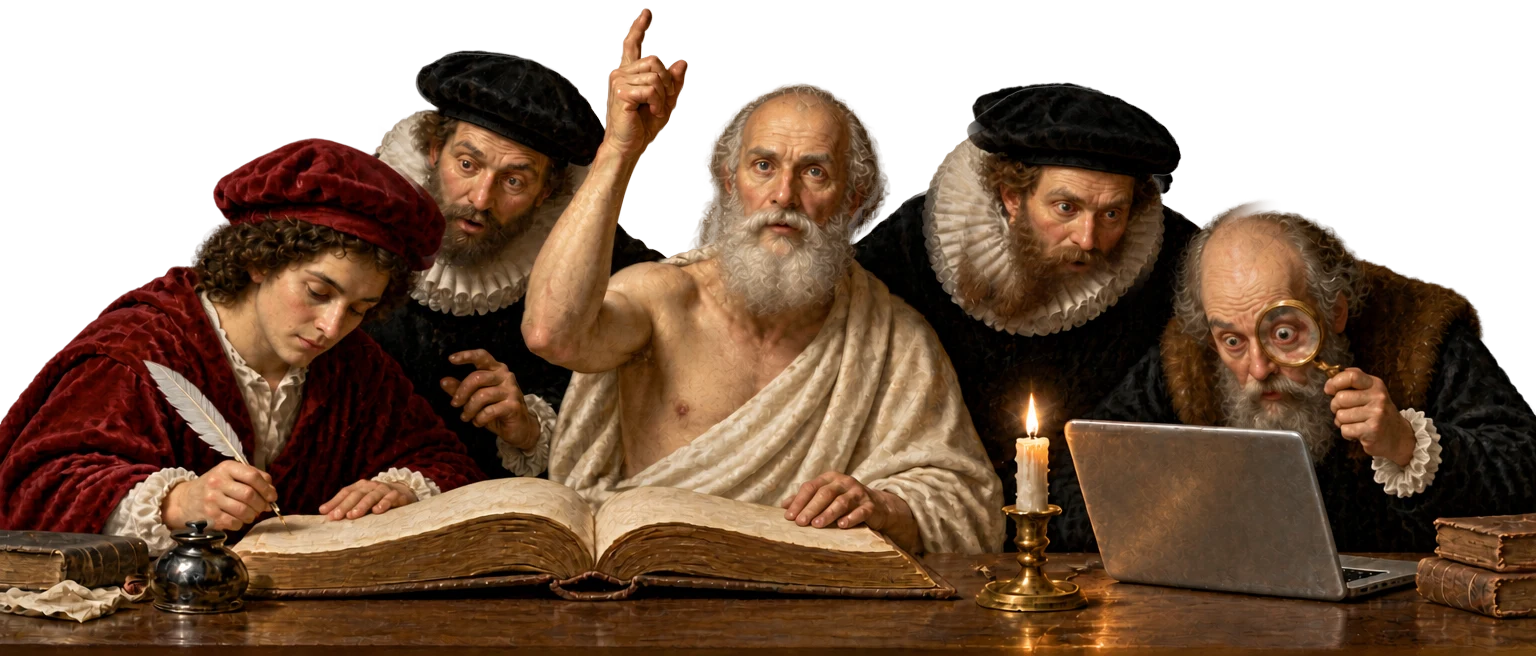
things worth copying out, kept under their headings
Of the sky
- 1.
Olbers’ paradox asks why is the night sky dark, when an infinite eternal universe should blaze in every direction? The answer I love is that the dark itself is evidence — the universe had a beginning, and the light from far enough away simply hasn’t arrived yet. The void does not signify emptiness, it signifies youth.
- 2.
If we look at a far enough galaxy, we’re not seeing a place, we’re seeing a time — light that left before there were eyes to receive it. The night sky isn’t a map of where things are, it’s more of a museum of where they were.
- 3.
The Fermi paradox is a wound dressed as a question. The galaxy is old enough, wide enough, and quiet enough that the silence has to mean something — and every answer is a kind of grief. Either we’re alone, or we’re not, and it’s hard to say which is the lonelier sentence.
- 4.
A black hole isn’t a hole. It’s the densest possible somewhere, a place where the math of “here” runs out of road. We named the one object that hides everything after an absence, when it’s the most present thing in the universe.
Of making
- 5.
Meeting notes are a memory problem, not a transcription problem. Every good decision we made on Meetmemo came from asking “what will someone want to be reminded of in two weeks?” instead of “what was said?”
- 6.
Gall’s Law is secretly a theology: every complex system that works grew from a simple one that worked. We don’t design cathedrals, we grow them and backdate the blueprint.
- 7.
To create and to love are one gesture — both say this gets to exist now, because I’m attending to it. Being isn’t a noun. It’s a verb, and the verb is making.
Of markets
- 8.
Every price is a story with the inconvenient characters edited out. An externality is just the bill arriving at a different table than the one that placed the order.
- 9.
GDP measures motion, not meaning, which means a forest fire and the recovery post both count as growth. The number can’t tell healing from harm — and the civilisation runs on it.
- 10.
A disaster can be reconstructed from a regulation the way a coastline can be from its fossils. Every rule is a monument to a past catastrophe, learned retrospectively — which is why they defend us so well against the last war and so poorly against the next.
Of ways of seeing
- 11.
Curation is the inverse of search. Search rewards knowing what you want. Curation rewards trusting someone who knows what you don’t want yet.
- 12.
I couldn’t put it into words in college, and it suddenly came to me — a taboo is technically a load-bearing wall you can’t see until someone knocks it through, and anthropology is mostly the study of which walls a people quietly agreed to stop questioning, so they could get on with living in the house.
The longer thoughts go out as letters: Theorianous.