11.
TMOE Deck
Turning a complex business into one clear master narrative
fig. 11 — Bruegel, Netherlandish Proverbs (detail)
TMOE · MASTER NARRATIVE
Turning Audiences
into Economies
A master narrative for a complex, interconnected business.



TMOE · MASTER DECK
Making complexity easy to understand.
I absorbed years of presentations, found the connective idea, and turned it into a brand narrative and visual direction that a new audience could follow.
01 · THE COMMUNICATION PROBLEM
The material was rich. The explanation was doing too much at once.
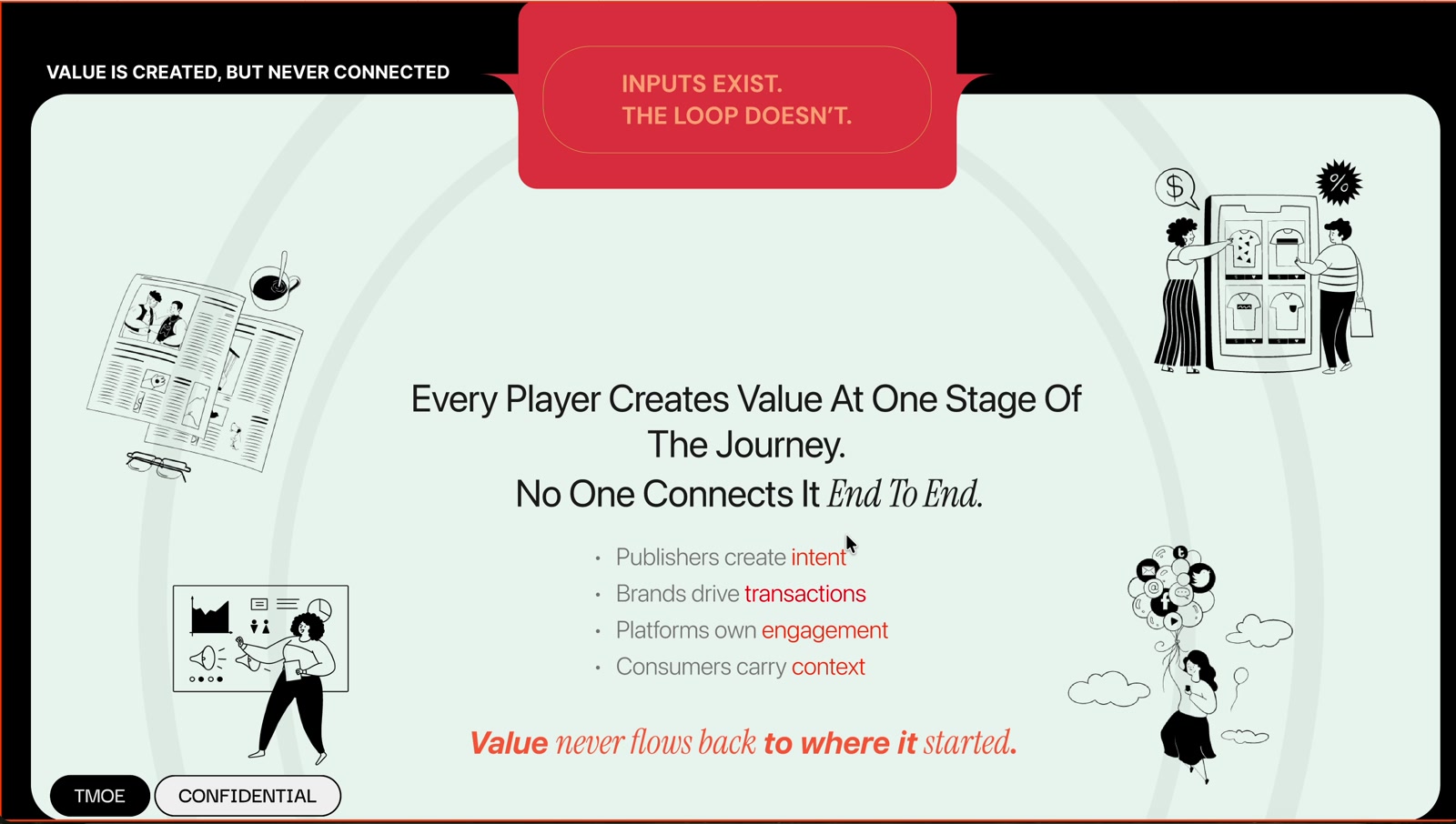
TMOE's businesses were connected, but the source presentations described them from different angles and at different levels of detail. For a lay audience, the whole could feel harder to grasp than any one part.
My job was not to disclose or compress every operating detail. It was to identify the central argument, decide what belonged in the foreground, and give the organisation a coherent way to present itself.
02 · HOW I SHAPED IT
A deck system built in three passes.
Find the throughline
I reviewed the existing presentations as one body of evidence, mapped recurring ideas, removed repetition, and found the simplest sequence that could hold the complexity.
listen · cluster · nameTranslate for people
I changed specialist language into plain, progressive explanations—revealing just enough information at each beat for the next idea to feel earned.
context · tension · ideaGive it a visual rhythm
I defined how hierarchy, pacing, colour, diagrams and transitions should work together, so the visual language clarified the argument instead of decorating it.
pace · hierarchy · recall03 · FROM ARGUMENT TO SYSTEM
The animation made the structure visible in time.
Movement was used to control attention: first the unifying idea, then the engines beneath it, then the relationships between them. The audience did not have to decode the entire organisation in one frame.
- Reveal the central claim before the mechanics
- Use recurring illustration motifs as memory anchors
- Let transitions explain relationships—not merely decorate them
04 · WHAT CHANGED
The work was as much subtraction as design.
Versions became a source library
I treated the earlier decks as raw material, locating repeated claims, contradictions, proof points and language worth preserving.
Business logic became audience logic
The sequence was rebuilt around what someone needed to understand next—not around the organisation's internal structure.
Detail became progressive disclosure
Dense information was divided across beats, using section dividers, recurring motifs and purposeful pauses to control cognitive load.
Slides became a reusable grammar
The system established repeatable patterns for claims, diagrams, evidence, case studies and chapter transitions.
05 · BRAND + VISUAL DIRECTION
Every slide had to feel like part of the same conversation.
One voiceConfident enough for leadership, clear enough for someone meeting the business for the first time.
One visual grammarRepeatable rules for emphasis, diagrams, section changes and moments of proof.
One paceShort claims, deliberate pauses and progressive explanation instead of information arriving all at once.

06 · THE MASTER DECK
A usable story—not an archive of everything.
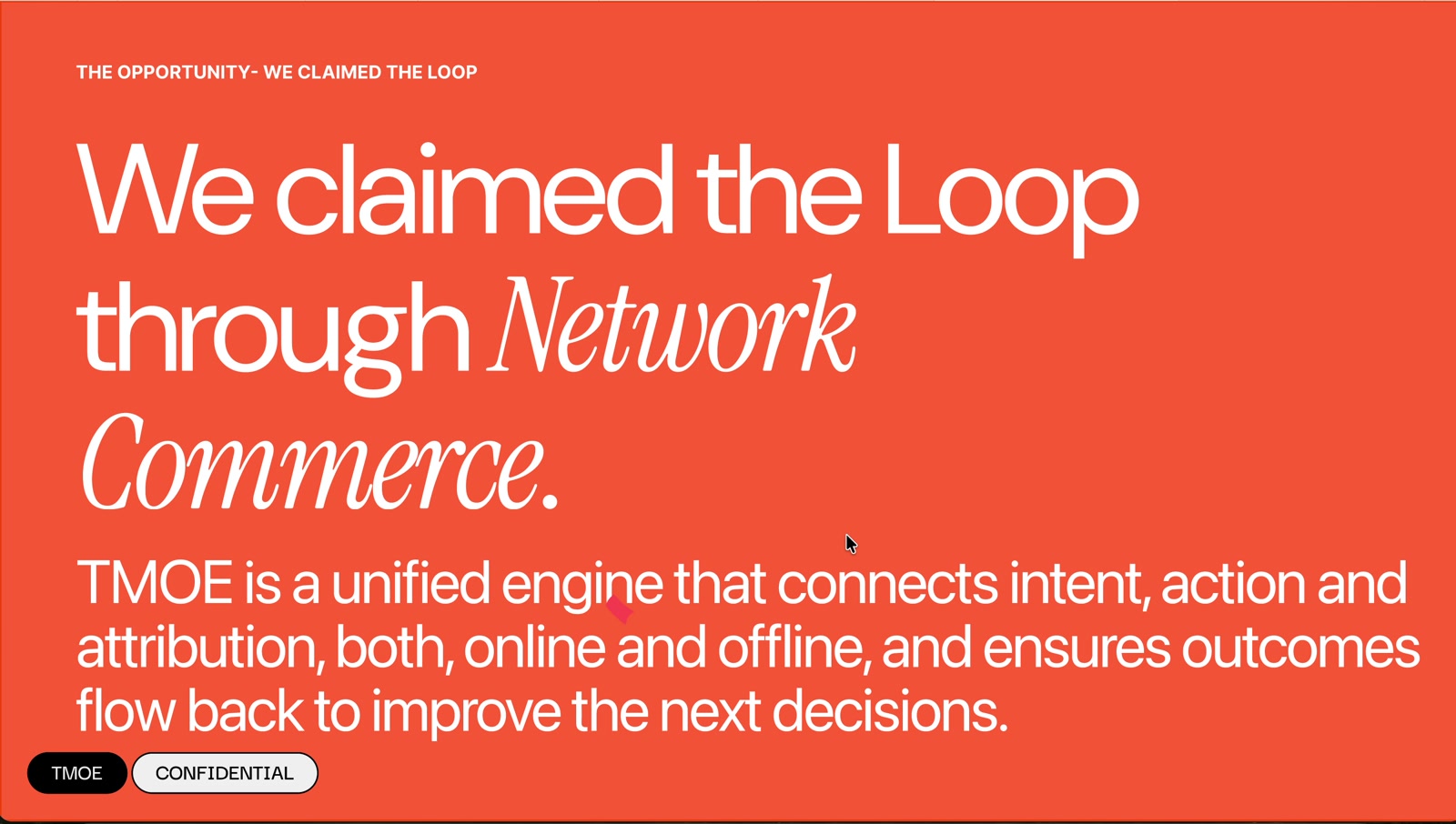
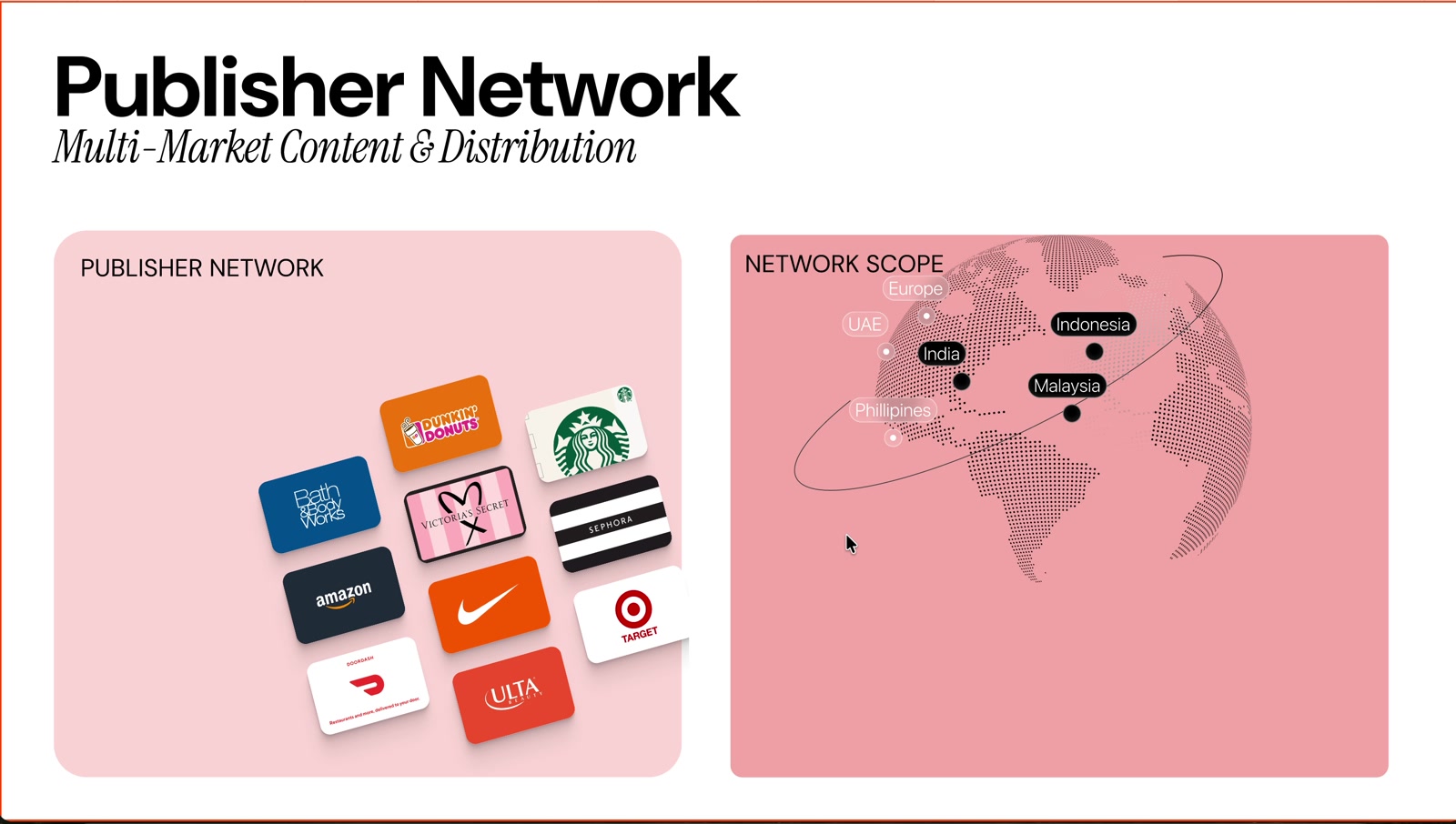
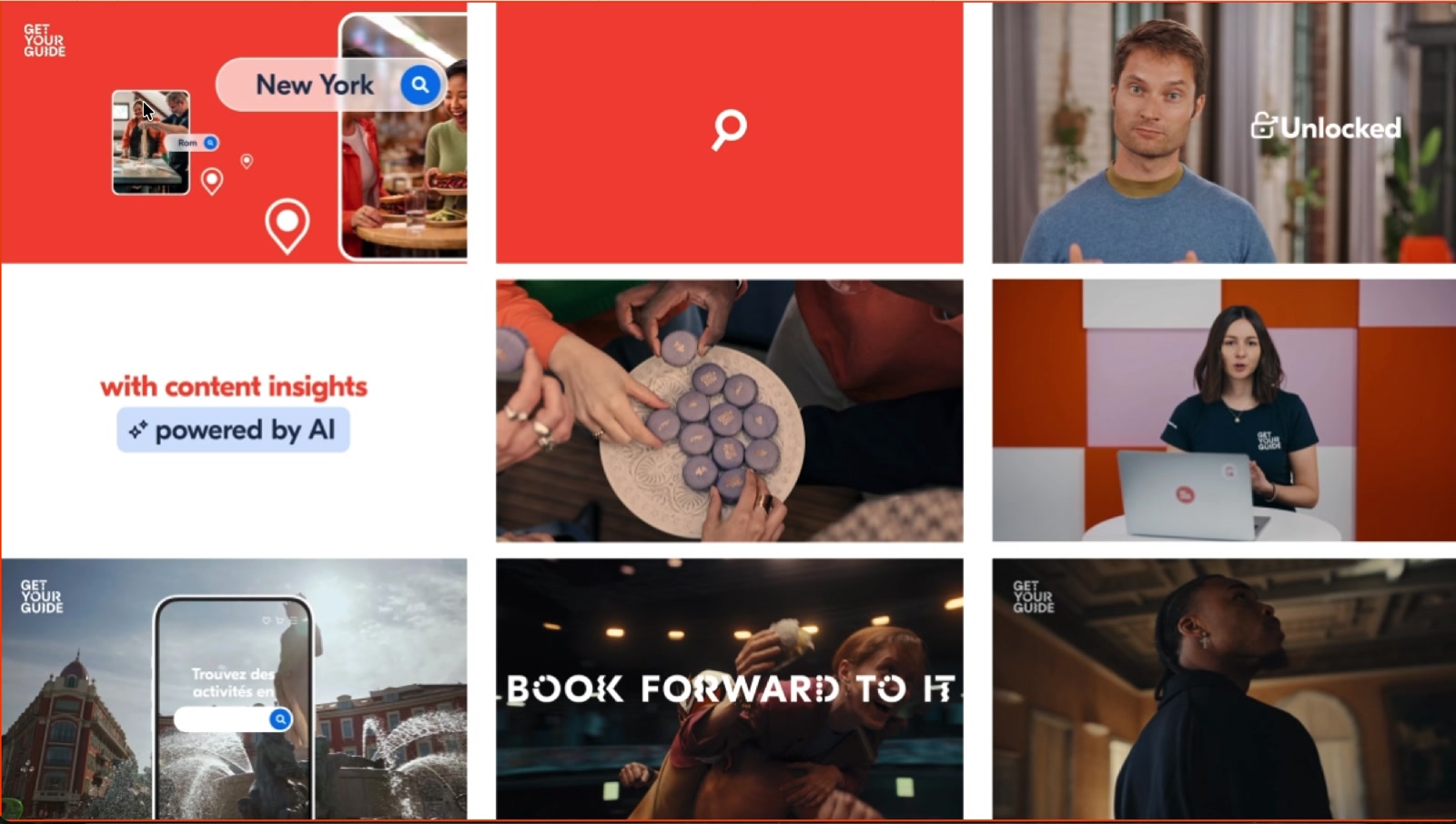
The result was a reusable master presentation: a central narrative, modular proof points and a visual grammar that gave TMOE a consistent way to introduce the business, explain how its parts connect, and adapt the story for future conversations.
The underlying business strategy and internal details remain intentionally confidential. This case study focuses on the communication design.